In September, I quit my childhood dream job. I resigned as my league's fantasy football commissioner. I wrote a big heartfelt message to my league's whatsapp group, hit send and waited for my group of childhood best friends to react. The second I sent it, I felt an immediate rush of relief and lightness. If you're like me, you probably love to volunteer to take on tasks that create opportunities for you to stay connected with friends and create fun experiences. Even when those tasks are annoying, time consuming or repetitive, you still feel like it's worth it in the end because it's creating a sense of belonging amongst a group of people you care about.
Which brings me back to fantasy football - I realized that this work was no longer something I HAD to do. I didn't enjoy it, it didn't bring me fulfillment, and it was something that was the kind of thing a previous (college-age) version of me had time and energy to prioritize. Back then I sent out weekly updates, proposed new rules and had fun messing with my friends and talking crap about their teams. Now as a quickly approaching middle-aged geezer dad with a wife, son and business to run, my days are overflowing. I had to take something off my tray and put it back onto the buffet platter (note: do not actually put food back from your plate onto a buffet, that's nasty!). Doing that took emotional energy - it felt like quitting - but ultimately was the right choice.
I was thinking about this idea of quitting when my wife recommended a recent podcast episode from Mel Robbins featuring Cal Newport. The interview is well worth a full listen, but the gist of it is this: We (specifically American office-working adults) are addicted to the idea of "being busy". He goes into the history of knowledge work (which as a workplace strategy nerd I found fascinating - your mileage may vary) and the idea that the performance of work has become a placeholder for measuring the actual value of knowledge work. That's all to say, it's imperative that everyone take a look at what's on your "to do" list and find things to take off of it so that you can focus on what's really meaningful, valuable and fulfilling.
Here's how to do that: Use something called the "Eisenhower Matrix". Invented by, you guessed it, General Dwight D. Eisenhower (side note: Can you imagine how many emails and Zoom calls it took to plan the Normandy invasion? I'm getting tired just thinking of the Slack notifications he had on his phone in the spring of 1945…yikes).
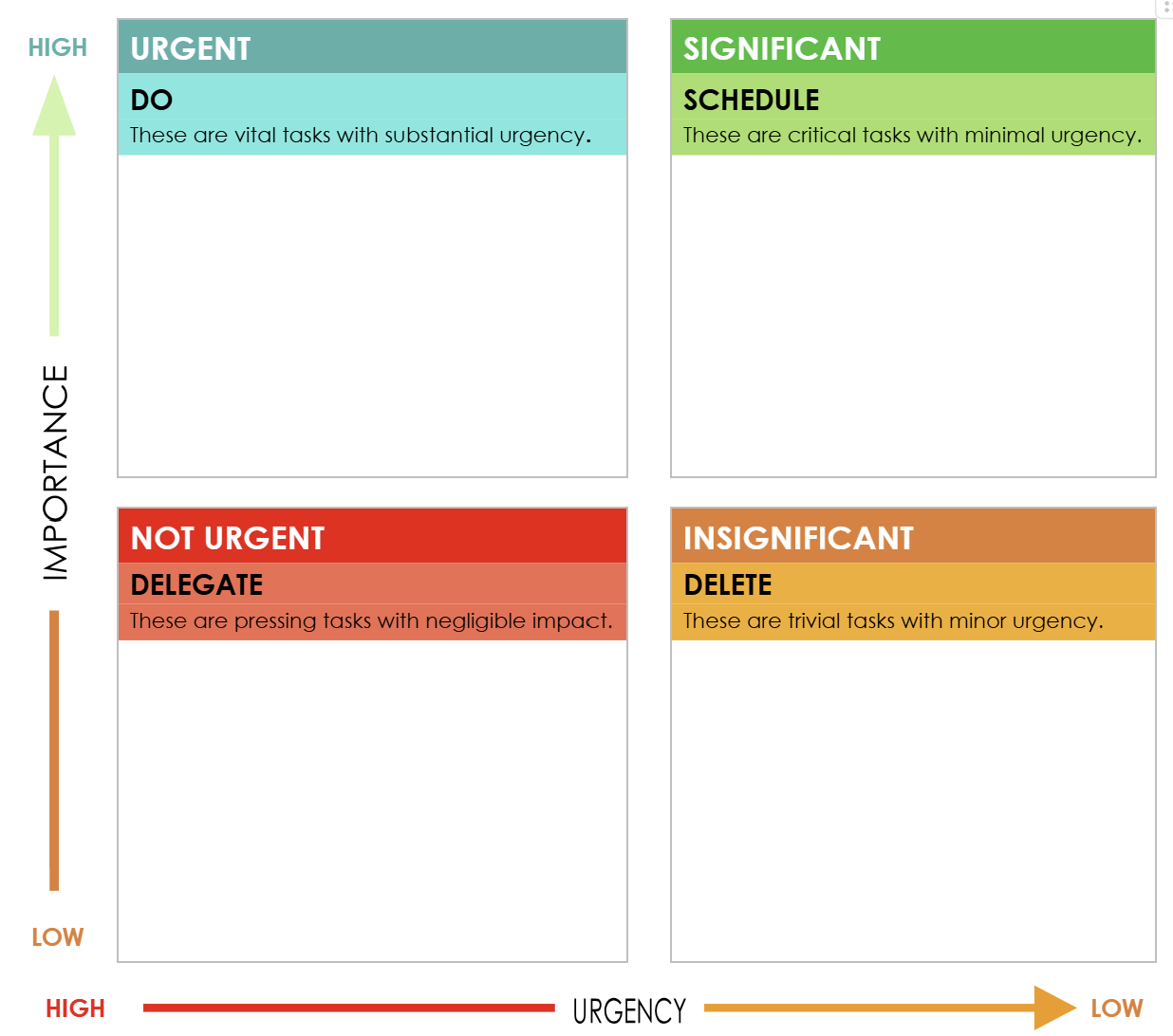
The big idea here: Everything on your to do list can be ranked across two categories: urgency and importance.
Try this:
Look at what's on your to do list today, and give every task a binary (yes/no) rating. Is it urgent? Is it important?
Then put the tasks into one of the four boxes.
Box one - urgent and important. Do these first (while you're drinking your coffee in the AM)
Box two - not urgent and important. Find a time on your calendar and sechedule a time to do it later this week.
Box three - urgent and not important. Find someone else to do this for you. Delegate it to a teammate, direct report or, if you're feeling frisky, find a way for an AI tool to do this for you in less than 2 minutes.
Box four - not urgent and not important. Delete it! Write each on their own sticky note, go outside, and light them all on fire. (This is important to do for dramatic effect)
I'm being serious here - you have to delete the tasks in box four. Self destruct the sticky notes like a mission-impossible mission recording. Get into this habit and you will see results in less than a week.
Do now: Email me back one task from your "not urgent and not important" box. Better yet, send me a video of you burning that dang task up with some fire!